TRUST & ACCOUNTABILITY
Better decisions need clear responsibility.
An intelligent system can be useful only if the people who depend on it know what information it used, who had permission to approve an action, and whether the result was actually verified. Security and accountability should not be separate from the intelligence process.
Ceryvra is designed to place access controls, approval requirements, evidence, independent verification, and recovery within that process—so confidence comes from safeguards and records, not just an AI-generated explanation.
YOUR INFORMATION AND AUTHORITY
The organization remains in control.
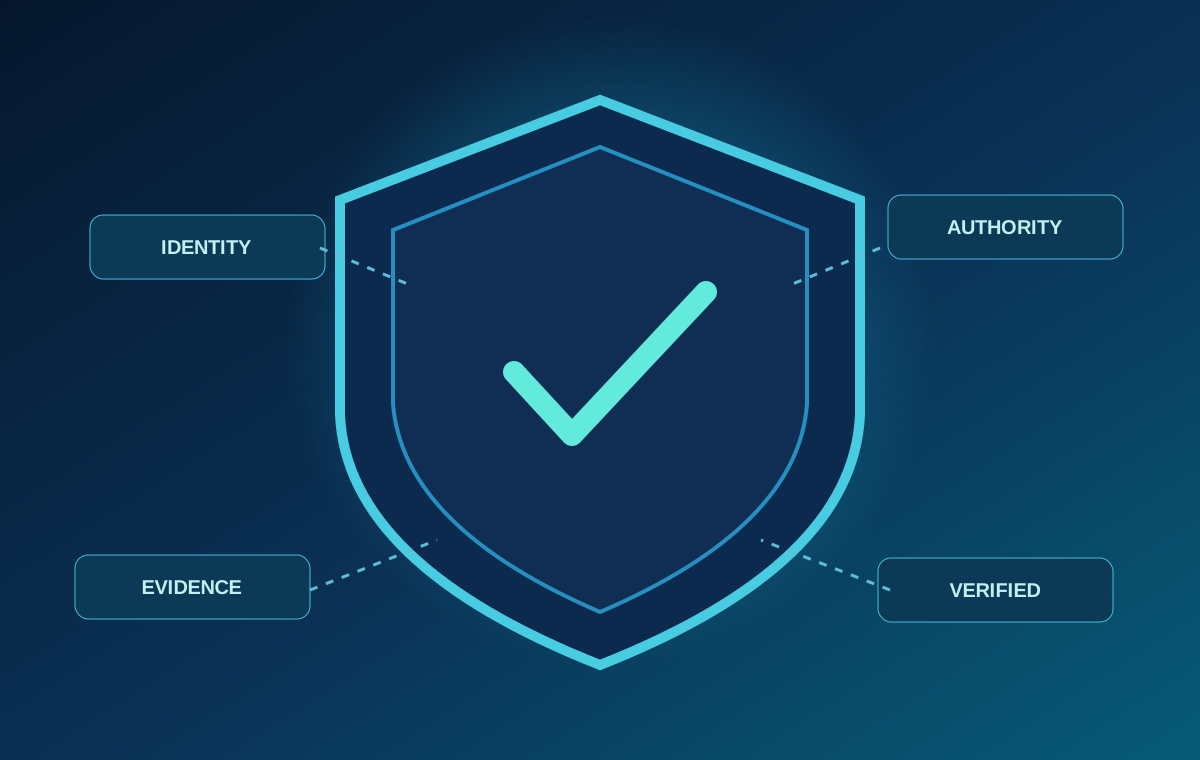
Ceryvra is intended to use only information and systems that an organization authorizes. Access must reflect the responsibilities of the person, service, or automation requesting it. That means a staff member should not gain access to sensitive financial, patient, student, or personnel information simply because they are using an intelligent assistant. The system’s underlying architecture is intended to preserve boundaries between customer organizations and constrain each integration to the permissions it needs.
Permission to review a possible action is not the same as permission to carry it out. A recommendation to change a process, transfer resources, or update another system may require a designated person to approve it. Ceryvra is designed to recognize those boundaries and keep proposed actions separate from authorized execution. In sensitive environments, the right answer may be to escalate, request more evidence, or decline to act.
The benefit for customers is straightforward: the platform should help teams work with information while preserving the rules and responsibilities that govern their business.
EVIDENCE AT EVERY STEP
A recommendation should have a basis you can examine.
Business leaders need more than an AI response that sounds convincing. They need to understand whether the information is current, whether it came from an appropriate source, and what uncertainty remains. Ceryvra is designed to retain evidence and context that support important recommendations and to distinguish verified knowledge from assumptions, incomplete information, and tentative predictions.
That distinction also matters after an action is executed. A system may report that a request was sent, but the receiving application may have rejected it. A ticket can be marked resolved while the underlying issue still affects users. The intended verification approach checks for evidence of the actual result, instead of treating an attempted step or a monitoring signal as proof of success.
When verification cannot be completed, the platform should not quietly convert uncertainty into a positive outcome. Its design calls for clear exception handling, recovery paths, and an accountable record of what remains unresolved.
SECURITY THROUGHOUT THE LIFECYCLE
Why this matters in real operations.
Imagine a system recommending that a customer’s payment account be updated. Before anything changes, the organization should be able to establish whether the data is accurate, which account is involved, who is authorized to approve the change, whether the requested action falls within policy, and how a successful update will be confirmed. Each of those questions is part of a responsible workflow, not a separate security checklist applied afterward.
Ceryvra is designed to support this kind of controlled sequence. Its security model includes intended tenant isolation, role-based and delegated permissions, policy checks, constrained integrations, audit evidence, and safeguards around AI use. These controls still need validation in the actual deployment environment; a website description alone does not constitute a certification, security assessment, or guarantee.
The longer-term objective is to help organizations gain the benefits of intelligent workflows without surrendering control of critical decisions. Trust should be something the system can demonstrate through observable behavior and evidence.
DESIGNED FOR OVERSIGHT
Make accountability a normal part of improvement.
Technical teams need to know which systems were connected, what permissions were granted, and whether automation behaved as expected. Operational leaders need to know why a recommendation was made and who accepted it. Audit and compliance teams need the records required to examine decisions later. Ceryvra is intended to support these different needs from the same underlying event and evidence trail.
Specific compliance obligations vary by industry, jurisdiction, and customer environment. Ceryvra can be designed to help organizations work within those obligations, but adoption of the platform by itself does not make an organization compliant. Appropriate controls, configuration, testing, and ongoing governance remain essential.
LET'S TALK ABOUT YOUR BUSINESS
Ask how Ceryvra would protect your environment.
We can discuss access boundaries, security expectations, approvals, and the evidence requirements that matter to your organization.
Start a conversation